
Why Guidelines Exist
The guidelines you’re about to learn were not written in a vacuum.
They were built from years of real court experience and refined through the work of professionals committed to producing accurate, reliable results.
Timothy Baxter took the habits, decisions, and patterns that consistently produced accurate work—and made them clear, repeatable, and intentional.
More recently, those standards have been further refined through the combined experience of operations and field professionals who understand where this work becomes difficult—and where strong judgment matters most.
This is not generic training.
It is a collection of real-world expectations designed to help researchers make accurate, consistent, and defensible decisions.
When you apply these guidelines, you’re not starting from scratch.
You’re stepping into something that’s already been built—and helping carry it forward.
From Standards to Judgment
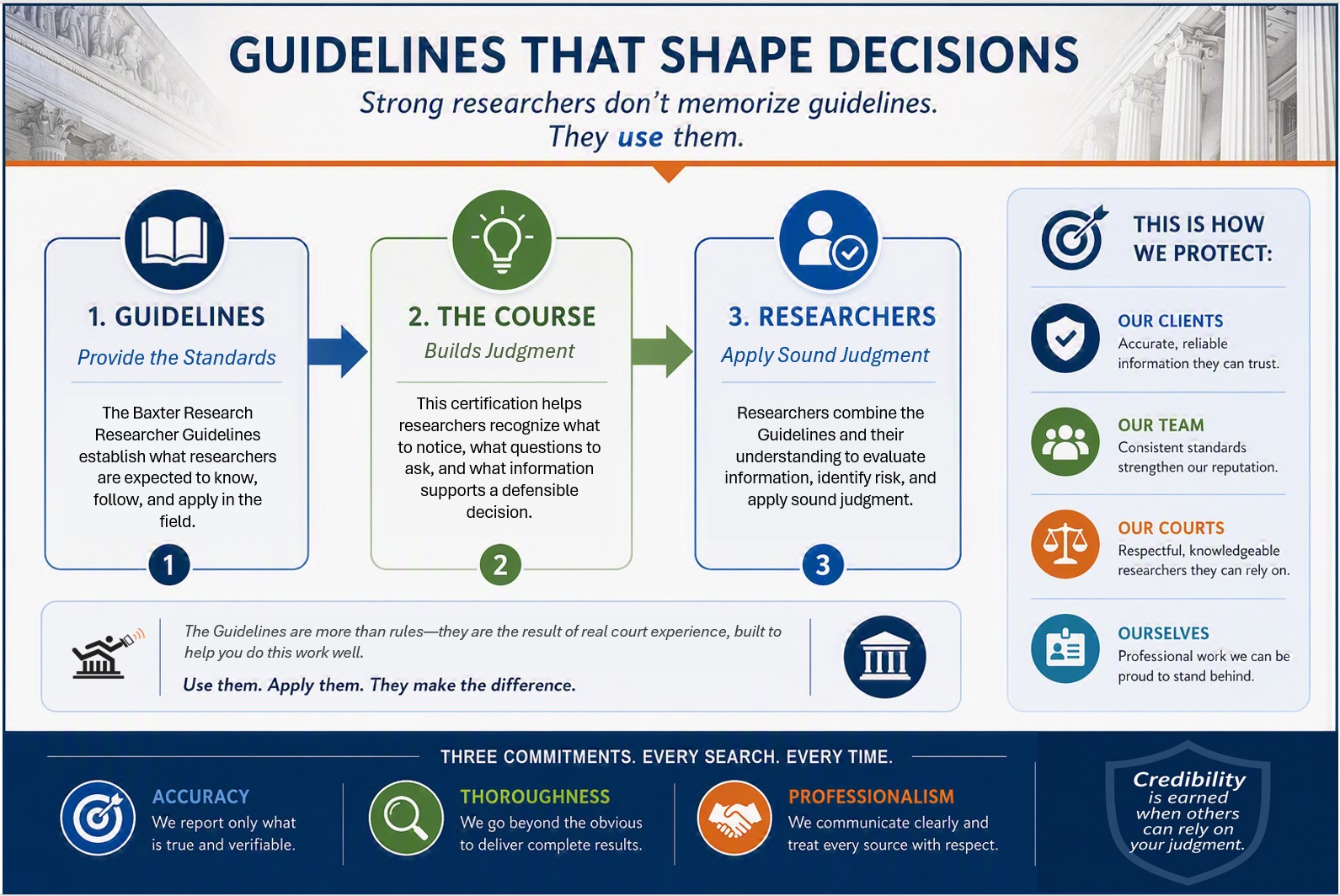
The Guidelines establish the standards researchers are expected to understand, follow, and apply. This certification helps researchers understand how those standards support real-world decisions.
Key Takeaway
Strong researchers do not memorize Guidelines for the sake of memorization. They use them to evaluate information, identify risk, and make defensible decisions.
Pause & Consider
Why do the Researcher Guidelines exist?
The Guidelines were developed from real court research experience and refined over time. Consider how consistent standards help researchers make accurate, thorough, and defensible decisions.
The record should support the decision.